
For vacant building security, replace the protection previously provided by everyday occupancy with a deliberate plan for access, inspection, fault reporting and response. Start by naming the person accountable for the building until the next tenant takes over.
Vacancy is an operating condition, not an absence of operations. Contractors still visit, equipment may remain, services may be disconnected and faults can go unnoticed. An old occupied-building plan may assign tasks to people who are no longer there.
This article is for owners and facilities managers planning an ordinary vacancy. Unsafe buildings, suspected criminal occupation and hazardous materials require the appropriate authorities and specialists. Do not send an unprepared person inside to investigate a possible intrusion.
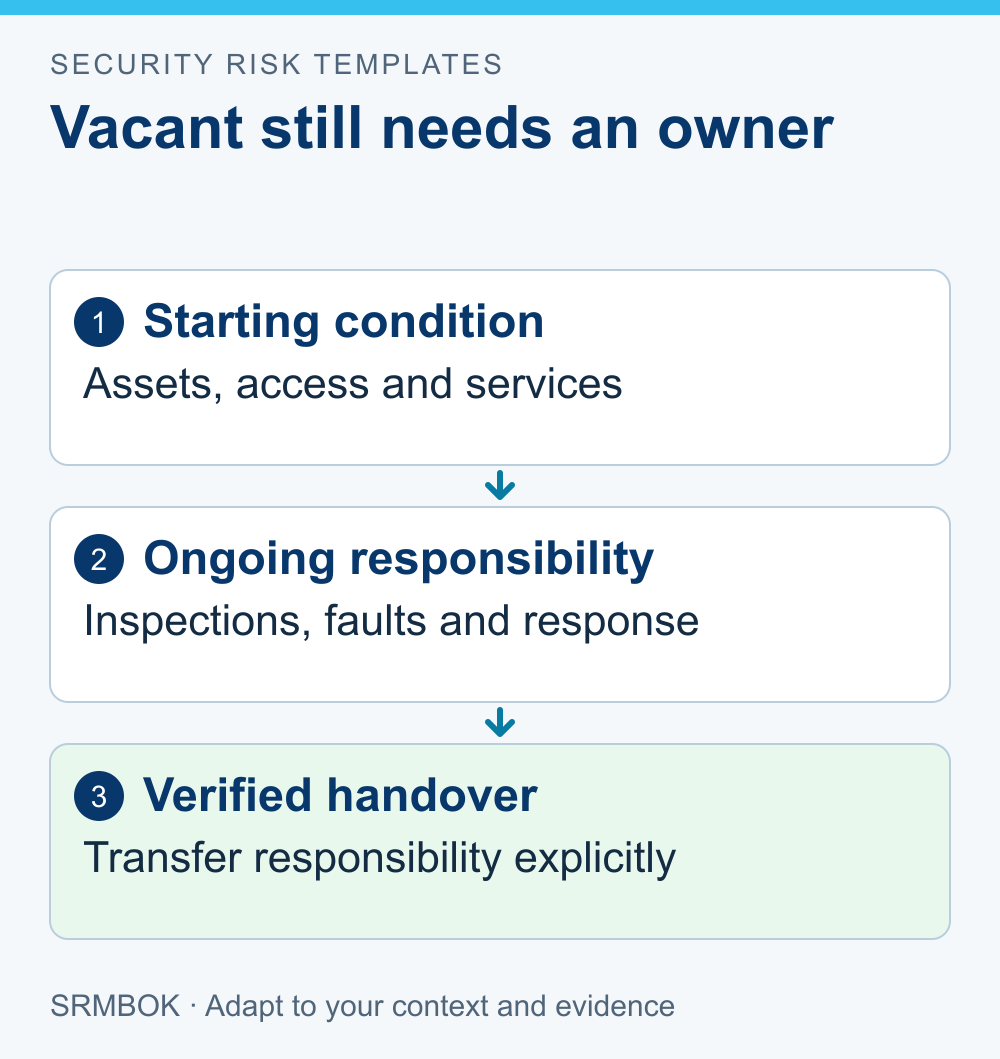
Establish the starting condition
Record the vacancy date, areas included, assets remaining and parties still entitled to enter. Clarify who controls the site while agents conduct viewings or contractors remove fixtures.
Arrange an authorised condition review before the last occupants leave. Capture relevant defects, existing damage, key and credential holdings, security-system status and service arrangements. Store sensitive details in a controlled record rather than a public letting pack.
Distinguish items that have been removed from items that are merely expected to be removed. A monitoring contract may still be active even after its communication service is cancelled. A system shown on a plan may have been disconnected during strip-out.
Confirm the actual state with the responsible provider, including who will receive a notification and act while the building is empty. A photograph of an alarm panel does not establish that notifications reach someone capable of responding.
Decide what must remain protected
Consider people who may legitimately enter, the building fabric, remaining assets and the effects of an incident on neighbours or adjoining occupied premises. Include deterioration that could weaken protection, such as damaged openings or loss of lighting.
UK Police.uk guidance for unoccupied property recommends reviewing the property and its access boundaries, and warns that disconnecting utilities can affect alarms and CCTV. Use those general planning points while checking the requirements applying to your site.
Do not copy another building's inspection frequency or barrier arrangement without examining the conditions. A short gap between tenants in a staffed complex differs from an isolated property undergoing extended works.
Check insurance and service conditions with the relevant provider. Record the actual requirements and who will meet them; avoid assuming that the occupied-building arrangements continue unchanged.
Plan access during the vacancy
Create one current route for authorising access. Agents, cleaners, contractors and prospective tenants may need different permissions and supervision.
Record who holds keys or credentials, the purpose of access and the return or expiry arrangement. If several organisations issue credentials independently, agree how their records will be reconciled.
After a visit, someone needs to confirm that the relevant areas are secured and any changed conditions are reported. Define this responsibility at the booking stage. The last contractor to leave should not discover that nobody knows who closes the building.
Keep emergency access and life-safety arrangements under competent control. Security measures must be coordinated with the building's current safety arrangements, especially where occupancy and works are changing.
Worked example: a tenancy between occupants
A fictional commercial unit will remain empty while its owner seeks a tenant. Maintenance contractors still attend. The owner records the following planning decisions.
| Condition | Required action | Owner and evidence |
|---|---|---|
| Previous tenant has departed | Reconcile issued access and verify authorised changes | Property manager keeps the completed access record |
| Communications service may be cancelled | Confirm alarm communication before any cancellation | Service owner records provider confirmation and functional check |
| Contractors enter during the week | Use authorised bookings and a defined closing handover | Works coordinator records access and reports exceptions |
| Inspection reveals a new opening or damaged barrier | Escalate promptly and arrange assessed interim protection | Facilities owner records condition, decision and repair verification |
| New tenant is ready to occupy | Transfer responsibility against an agreed condition record | Both parties confirm the handover boundary and open defects |
The plan remains active until responsibility has actually transferred. A signed future lease does not by itself prove that the new tenant is operating the site's controls today.
Make inspections useful and safe
Define what an inspection is intended to establish. The inspector might confirm authorised access, identify new damage and report whether specified visible systems appear normal. Technical performance checks may need a separate provider.
Give inspectors a safe approach and escalation procedure. If there are signs of intrusion, unsafe conditions or unauthorised activity, they should follow the agreed response route rather than investigate alone. Record how they obtain assistance when normal building communications are unavailable.
Use a checklist with room for observations and exceptions. An identical ticked form every week may hide a changing condition. Ask for evidence of the relevant check without encouraging unnecessary photography of sensitive details.
Choose the frequency through the site's assessment, any applicable conditions and the speed with which an unnoticed problem could become serious. Reconsider it after a material change rather than assuming the original interval remains adequate.
Revisit the plan when the vacancy changes
A delay in reletting, start of demolition, change of contractor or utility shutdown can alter the plan. Specify who must notify the owner before those changes occur.
If temporary protection is added, record its operating needs and expiry. A short-term guard arrangement still requires suitable instructions, supervision and a clear response route. A temporary camera still needs power, communications, authorised operation and maintenance.
Keep open defects visible at handover. Tell the incoming tenant which controls have been demonstrated, which remain limited and which service contracts they must establish. Avoid describing the property simply as “secure” when that word conceals unresolved decisions.
Use an operational security plan for the vacant period and a treatment schedule for outstanding work.
Your next action
Create a vacancy responsibility record today: accountable owner, authorised access route, inspection arrangement, fault contact and conditions requiring immediate review.
The paid SRMBOK Security Plan Templates provide editable planning and treatment examples. Adapt the relevant sections to the vacancy period, keeping the temporary responsibilities, inspection evidence and handover conditions clear rather than retaining unnecessary enterprise-level detail.